DDoS and Abuse: What Providers Handle and What You Must
Providers absorb the large, dumb attacks. The ones that take sites down are small, cheap and aimed at your application.
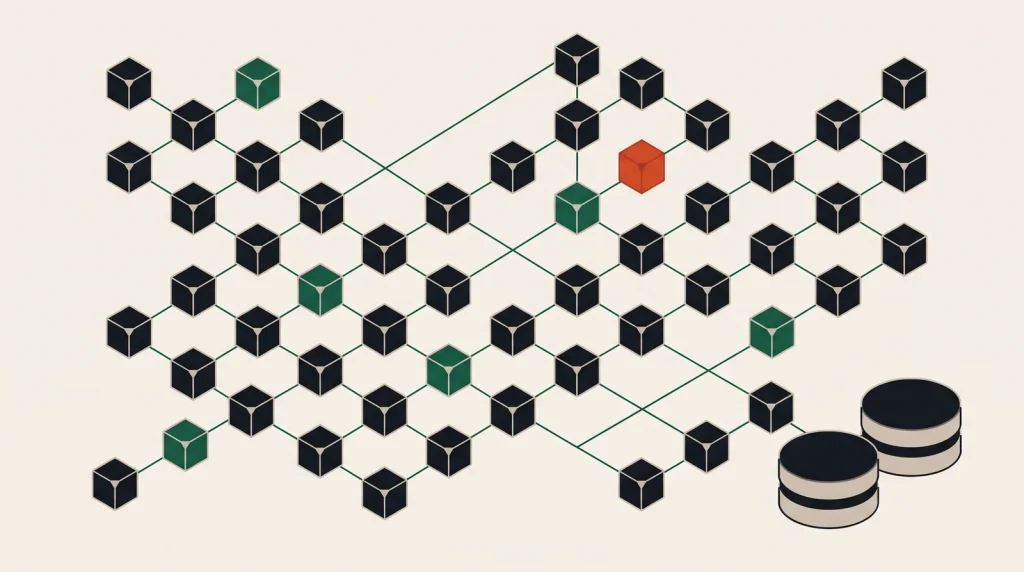
Volumetric denial-of-service attacks — the ones measured in terabits — are largely a solved problem for the provider. What still takes sites down is much smaller and aimed at the expensive parts of your application.
What providers include
| Provider | Included protection | Paid tier |
|---|---|---|
| OVHcloud | Always-on volumetric mitigation on all services | Higher-capacity options |
| AWS | Shield Standard on all resources | Shield Advanced with response team |
| Azure | Basic DDoS protection | DDoS Network Protection |
| Google Cloud | Edge protection with Cloud Armor | Cloud Armor Managed Protection Plus |
| DigitalOcean / Linode / Hetzner | Network-level mitigation | Generally not sold separately |
All of this stops network-layer floods. None of it knows that your search endpoint runs an expensive query.
The attacks that actually hurt
- Application-layer floods — well-formed requests to the most expensive endpoint. Low bandwidth, high cost per request.
- Slow attacks — connections held open with minimal data, exhausting worker slots rather than bandwidth.
- Cache-busting — random query strings so every request misses the CDN and reaches the origin.
- Credential stuffing — not denial of service, but the same load pattern, plus account takeover risk.
- Scraping — aggressive crawlers that cost real money in egress.
These are cheap to launch and cannot be distinguished from legitimate traffic at the network layer, which is why they need application-layer defences.
Defences, in order of value
- Put a CDN in front of everything. Cached responses never reach your origin, and the CDN absorbs the volume.
- Rate limit per IP and per identity, at the edge if possible. Most abusive traffic stops here.
- Cache aggressively, including short-lived caching of dynamic responses. Even ten seconds collapses a flood.
- Deploy a WAF with managed rules for the common patterns.
- Ignore query strings you do not use in cache keys, so cache-busting fails.
- Autoscale with a ceiling. Scaling protects availability; the ceiling protects the bill.
- Add a challenge — a proof-of-work or CAPTCHA on suspicious traffic only, never on everyone.
Protect the origin address
If an attacker learns the origin IP, they bypass the CDN entirely. Common leaks: historical DNS records, mail sent directly from the web server, TLS certificate transparency logs, and error pages that disclose the address.
Where possible, restrict the origin firewall to the CDN’s published address ranges so direct connections are refused.
Watch the bill as well as the availability
A successfully absorbed attack can still be expensive. Autoscaling and egress both bill by usage, so an attack you survived can arrive as an invoice.
- Set billing alerts that fire quickly, not just monthly.
- Cap autoscaling group maximums deliberately.
- Prefer CDN egress, which is usually cheaper than origin egress.
- Monitor requests per second alongside cost per hour.
Have a short plan written down
- How do you tell an attack from a traffic spike? Which dashboard, which metric.
- Who can enable stricter rate limits, and how.
- Which endpoints can be disabled temporarily without breaking the product.
- How to enable a challenge page for all traffic if it comes to that.
- Provider support contact and account details, available offline.
- How you will tell customers what is happening.
Half an hour writing this beats an hour improvising it during the incident.
Common questions
Do I need paid DDoS protection?
Most sites do not. Included protection plus a CDN and sensible rate limiting handles the realistic threat. Paid tiers are for high-profile targets and for the billing protection they include.
Will autoscaling absorb an attack?
It will keep the site up and it will keep spending. Always set a maximum, and pair scaling with rate limiting so you are not scaling to serve abuse.
Can a small VPS survive an attack?
Behind a CDN with caching, yes, more often than people expect. Directly exposed, no.
Is blocking by country effective?
It is blunt but sometimes practical during an incident if your users are geographically concentrated. It is not a permanent control, since attackers move sources easily.
Where to go next
See CDN and caching, which is the single most effective defence here, and security groups and firewalls.
Read next
API Keys and Secrets: Where They Leak and How to Stop It
Most cloud breaches start with a credential that should never have existed.
Audit Logging: The Thing You Wish You Had Turned On
Audit logs are useless the day you enable them and invaluable the day something goes wrong.
Security Groups, Firewalls and What Actually Filters Your Traffic
Cloud networks have several filtering layers with confusingly similar names.