Hyperscaler or VPS Provider? A Framework
The choice is not really AWS against Hetzner. It is how much of your infrastructure you want to operate yourself, and what that time is worth.
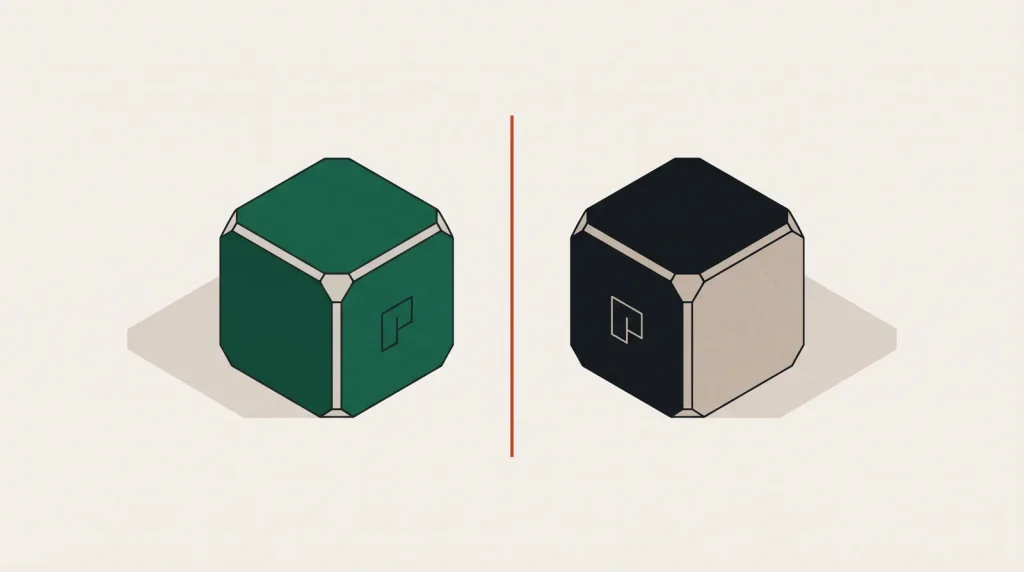
Teams tend to argue this as a price question, and price is the least interesting part of it. The real variable is how much operational work you are willing to own.
What you are actually buying
A VPS provider sells you compute, storage and networking. A hyperscaler sells you those plus a large catalogue of managed services that replace work you would otherwise do: database failover, queue durability, secret rotation, autoscaling, identity federation, audit logging, compliance evidence.
Every one of those has a self-hosted equivalent. The question is who runs it, and at what cost in attention.
When a VPS provider is the right answer
- The architecture is a handful of servers, a database and a load balancer, and it is not changing much.
- Someone on the team is comfortable administering Linux and is not the only person who can.
- Egress is significant — this is where the price gap is widest and most consistent.
- Workloads are steady rather than spiky, so elastic scaling is not the point.
- Compliance requirements are modest.
- The budget is genuinely tight and engineering time is cheaper than infrastructure spend.
When a hyperscaler is the right answer
- You need managed services you do not want to operate: a database with automatic failover, a queue with guaranteed delivery, a warehouse that scales without a cluster.
- Traffic is spiky and scaling to zero or to hundreds of instances is a real requirement.
- You need compliance certifications and audit evidence you can hand to a customer.
- You need identity federation with a corporate directory.
- You need a global footprint with regions in many jurisdictions.
- The team is small and its time is the scarce resource, not the budget.
A cost model that is actually honest
Compare total cost, not instance price:
| Line | VPS provider | Hyperscaler |
|---|---|---|
| Compute | Lower, often much lower | Higher |
| Egress | Included allowance or unmetered | Per GB, often the largest surprise |
| Managed database | You run it | Paid service, no operator time |
| Backup and DR | You build it | Largely built in |
| On-call burden | Yours | Shared with the provider |
| Compliance evidence | You produce it | Largely provided |
Put a real hourly rate on the rows that say “you”. For a team of two, a week spent building database failover is not free, and it recurs every time it needs maintaining.
The pattern most teams end up with
Not purity. A common arrangement is the main application on a hyperscaler for the managed services and compliance story, with cost-sensitive, egress-heavy or batch workloads on a VPS provider: CI runners, media processing, bulk storage, staging environments.
That is a deliberate split with a clear reason for each side. It costs one extra account and one more network boundary to secure, which is a fair trade when the saving is large.
Questions that settle it quickly
- How many gigabytes leave your network per month? Over a few terabytes, VPS economics get hard to ignore.
- Who gets paged when the database fails at 3am, and do they know what to do?
- Will a customer ask for a compliance report in the next year?
- Does traffic vary by more than an order of magnitude day to day?
- How many hours a month can you afford to spend on infrastructure that is not your product?
Common questions
Is it hard to move later?
Moving from a VPS provider to a hyperscaler is usually straightforward, because you were running standard software on standard servers. Moving the other way is harder if you adopted proprietary managed services. Portability is a reason to stay near the primitives early on.
Can I get compliance certifications on a VPS provider?
Providers hold certifications for their own infrastructure, but the catalogue is smaller and the shared-responsibility evidence you must produce yourself is larger. Check the specific standard you need against the specific provider.
Do VPS providers scale?
Yes, to a point — plenty of substantial businesses run entirely on them. What they lack is elasticity in seconds and managed services at scale, not raw capacity.
Is a hyperscaler ever cheaper?
Yes, when heavy commitment discounts apply, when serverless means paying nothing while idle, or when the managed service replaces a person you would otherwise hire.
Where to go next
Concrete comparisons: Hetzner versus DigitalOcean and AWS versus Azure. For the cost levers themselves, cutting a cloud bill.
Read next

IBM Cloud vs Azure for Enterprise Hybrid
Both sell hybrid cloud to large regulated organisations. They differ on what they assume you already run, and on how…

AWS vs Google Cloud: Breadth Against Depth
AWS has more of everything. Google Cloud is better at a few specific things.
Alibaba Cloud vs AWS in Asia-Pacific
AWS has more regions worldwide. Alibaba Cloud has depth in Asia and the only practical route into mainland China.