Why Cloud Bills Surprise People
Cloud pricing is transparent and still routinely surprising. The reason is structural, not deceptive.
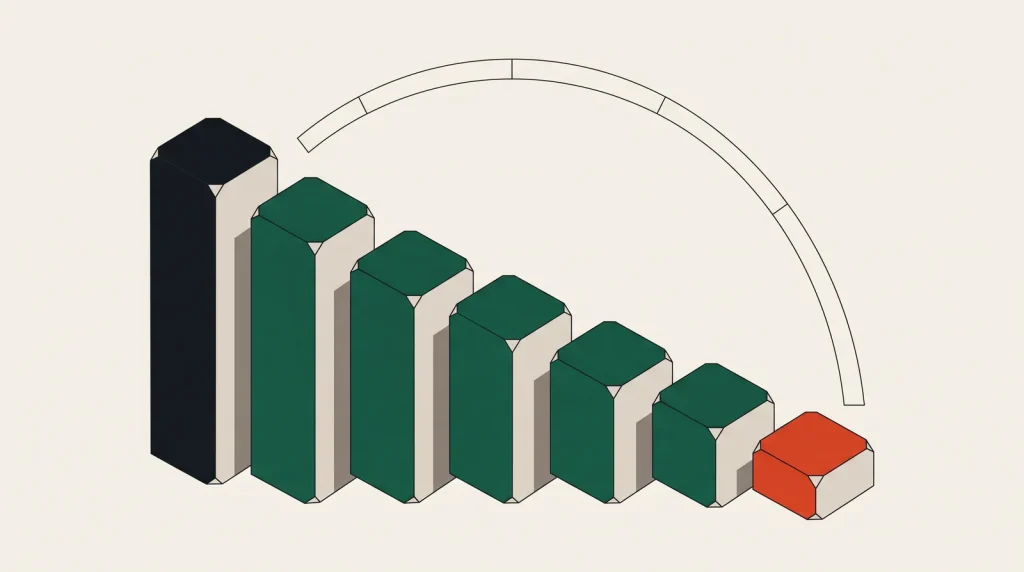
Every price is published. Every charge is documented. And the bill is still frequently double what was estimated. The gap comes from how cloud pricing is structured, not from anything hidden.
The estimate covered the instance, not the workload
A running application is not one line item. A modest production setup bills separately for:
- Compute, per hour.
- Block storage, per gigabyte-month, whether or not the instance runs.
- Snapshots, per gigabyte-month, accumulating.
- Egress, per gigabyte.
- The load balancer, per hour plus per unit of traffic.
- A NAT gateway, per hour plus per gigabyte processed.
- Public IP addresses, per hour.
- Managed database, DNS zones, certificates, logs, metrics, secrets.
- Support, if you bought a plan.
The compute line is often less than half the total. An estimate built from the instance price alone will be wrong by a large factor.
Charges that accrue without anything running
| Resource | Billed when idle | Common surprise |
|---|---|---|
| Block volumes | Yes | Disks left behind by deleted instances |
| Snapshots | Yes | Automated backups with no retention limit |
| Reserved IPs | Yes, often specifically when unattached | Addresses held for a project that ended |
| NAT gateway | Yes, hourly | One per subnet in a multi-zone design |
| Load balancer | Yes, hourly | Left running after a test |
| Stopped instances | Storage only | Assumed to cost nothing |
| Managed databases | Yes | Development database nobody uses |
Per-hour billing on things people think of as free
Networking components are the clearest example. A NAT gateway is conceptually plumbing, and it bills hourly plus per gigabyte processed. In a three-zone architecture with one per zone, plumbing can become one of the larger line items.
Where private endpoints exist for provider services, they usually cost less than routing the same traffic through NAT. That single change often removes a meaningful share of the bill.
Non-production costs as much as production
Development, staging, QA and demo environments frequently mirror production and run continuously. Production is used for 168 hours a week; staging is used for perhaps 40.
Scheduling non-production to shut down outside working hours removes roughly 70 per cent of its cost and affects nobody. It is the single easiest saving available.
Growth is not linear where you expect
- Log volume grows with traffic, and log storage and ingestion are billed by volume.
- Backups grow with data and with retention, multiplicatively.
- Object versioning grows silently without lifecycle rules.
- Cross-zone traffic grows faster than user traffic in a microservice architecture.
- Monitoring cardinality — unique metric series — can grow far faster than the systems being monitored.
The free tier ends
Free tiers are generous at first and often time-limited. A twelve-month tier means a step change on the anniversary, on resources that have been running quietly all year.
Always-free tiers are genuinely always free within limits, and exceeding those limits moves the whole resource to paid pricing. Know which kind you are relying on, and set a reminder for the expiry date. Cloud account credits explained covers the distinction.
How to estimate properly
- Use the provider calculator, and include every component, not just compute.
- Estimate egress explicitly; it is frequently the second largest item.
- Add non-production environments at realistic uptime.
- Add 30 per cent for the things you have forgotten. There are always some.
- Run for one month and compare against the estimate, then correct the model.
- Set budgets and alerts before the first resource is created.
Common questions
Is cloud more expensive than dedicated servers?
Per unit of raw compute, usually yes. What you buy is elasticity, managed services and global reach. For steady, predictable workloads a VPS or dedicated server is often substantially cheaper.
Why did my bill rise without any change?
Common causes: a free tier expiring, data growth in storage or logs, a commitment ending, or increased traffic. The cost explorer grouped by service will identify it in minutes.
Can I get a refund for a mistake?
Providers sometimes issue a one-off credit for a genuine accident, particularly a first occurrence. Ask through support with a clear explanation and evidence of the fix. It is not guaranteed.
What is the fastest way to reduce a surprise bill?
Delete unattached volumes and old snapshots, shut down non-production overnight, and check for NAT gateways and load balancers nobody needs. Those four take an afternoon.
Where to go next
See budgets and alerts and egress costs.
Read next
Cloud Pricing Models: Hourly, Monthly, Per-Request and Per-Gigabyte
The unit a provider bills in shapes the architecture you end up with.
Keeping Cloud Costs Sane in a Small Team
Small teams do not need a cost management practice. They need about six decisions made once and reviewed occasionally.
Egress Costs: The Line Item Nobody Provisioned
You choose an instance size. You do not choose an egress bill — it arrives as a consequence of decisions made…